
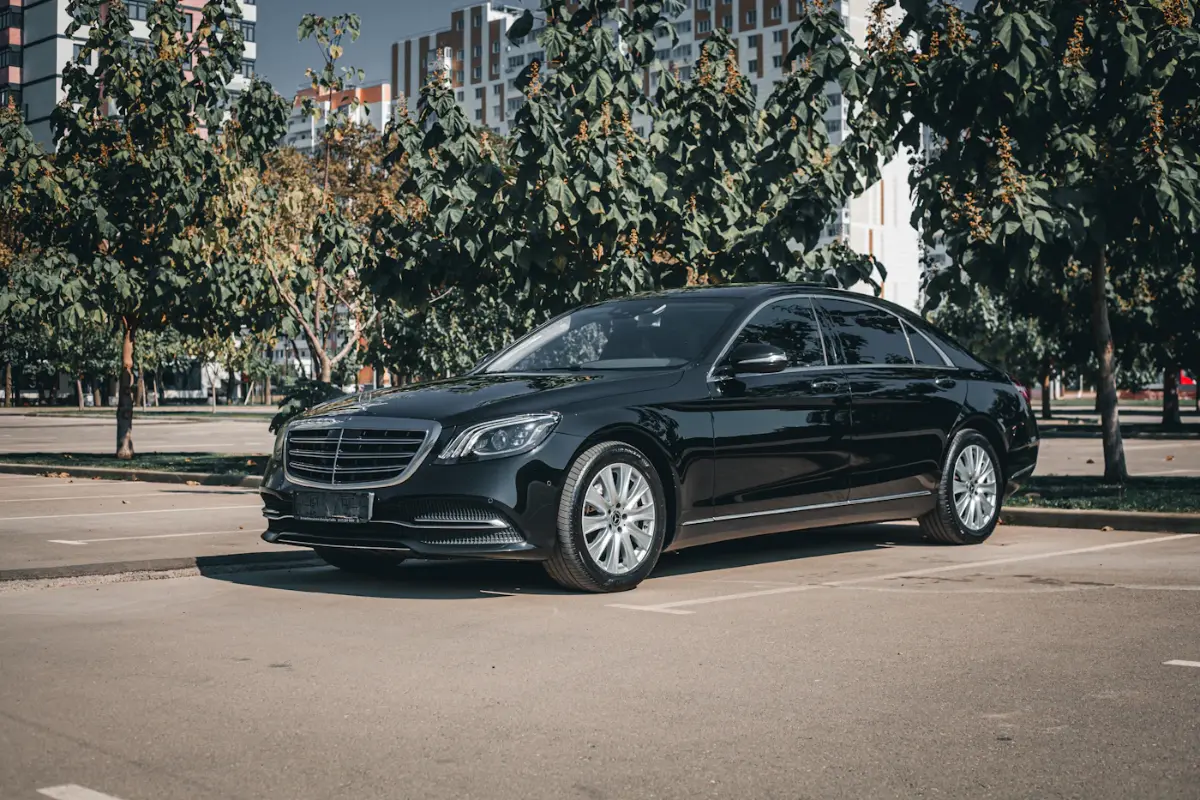
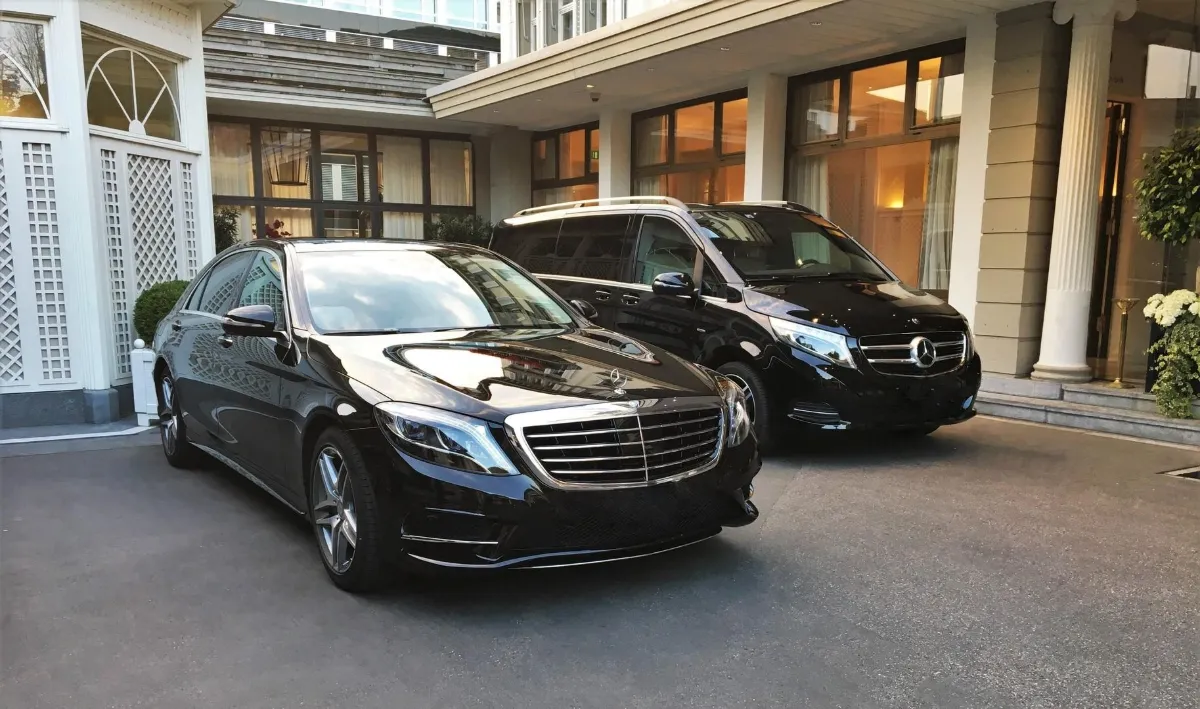


A roadshow is not fourteen transfers. It is one machine with fourteen moving parts, and the difference shows up on the second morning, when a meeting overruns in Zug and the entire afternoon has to be re-cut while the principals are still in the room.
Booked as fourteen separate journeys, that morning is fourteen phone calls. Booked as a programme, it is one. This is how the sheet is built, and why part of it is printed.
The unit is the day, not the journey
Multi-car programmes are almost always booked by time rather than by route, because the route is the thing that changes. Our hourly rate is CHF 120.00, or CHF 130.00 for Premium and SUV, with a four-hour minimum; a day longer than twelve hours is planned with the desk.
The commercial reason to book time rather than journeys is simple: a car held for you does not need a new price when the schedule moves. A car booked point-to-point does.
One dispatcher owns the whole board
Up to fourteen vehicles run under one dispatcher and produce one invoice. That is the single most useful thing about the arrangement and it is worth being precise about why.
The dispatcher is the only person who can see all fourteen cars at once, which means they are the only person who can answer the question that actually gets asked — “can car six take the Basel leg instead” — without a round of calls. Distances matter here: Zug is 45 kilometres from the airport, Luzern 68, Basel 90, Bern 135. A car released early in Zug is genuinely available for a Luzern pickup. A car in Bern is not, however willing the chauffeur.
Building the sheet
A three-day programme is planned backwards from the immovable points and forwards from the arrivals, and the sheet is really four documents that agree with each other.
- The master board — every car, every leg, every hour, held by the dispatcher.
- One sheet per chauffeur, showing only their day, their passengers and their contingency.
- A client-facing version with names and times and none of the vehicle assignments, which are noise to the people being driven.
- A rooming-and-reach list: which principal is in which car, and which chauffeur speaks which of German, English, French and Italian.
Car allocation is the part everyone underestimates. Keeping the same principal with the same chauffeur across three days is worth more than optimising kilometres, and for multi-day work we name that chauffeur in advance rather than assigning them each morning.
Why it lives on paper as well as a screen
Because the screen fails in exactly the places the work happens. Underground car parks at hotels and banks have no signal. A phone on its second day of a roadshow is at eleven per cent by four in the afternoon. And a chauffeur waiting ninety minutes outside a meeting should not be refreshing an application to find out whether anything has changed.
So every chauffeur starts the day with their own leg printed, including the two numbers that matter: the dispatcher, and the client contact who is actually in the building. The board on the screen is the live truth and it updates all day. The paper is what works when the live truth cannot reach the car.
It is a deliberate redundancy, not nostalgia. A programme that only exists on a screen has a single point of failure, and it is a battery.
What changes on the day, and what does not
Times change constantly. Cars change occasionally. What should not change is the fare, which is agreed in writing before the programme begins, and the chauffeur assigned to each principal, which is the whole point of booking a programme rather than a fleet of strangers.
None of the cars carry branding. On an investor day that is not an aesthetic preference — fourteen identically liveried vehicles outside a building announce precisely what the day is, to anyone watching.
What the desk needs to build it
- The immovable points first: arrivals, the board meeting, the flights out.
- Party sizes per leg, and who must travel with whom.
- Any principal who should not be named aloud at an arrivals hall.
- The one person on your side who can approve a change at 08:40 without a meeting.
- Cost centres, if the day splits across more than one — the invoice carries your reference on every line, but only if we have the references.
Fourteen cars, one sheet, one dispatcher and one invoice. On the third morning that sheet is usually annotated in three colours, half the pickup times have moved, and the printed copy in the lead car is the version everyone is working from. Everything moves. The sheet is how it moves without anyone in the back seats being asked to.